

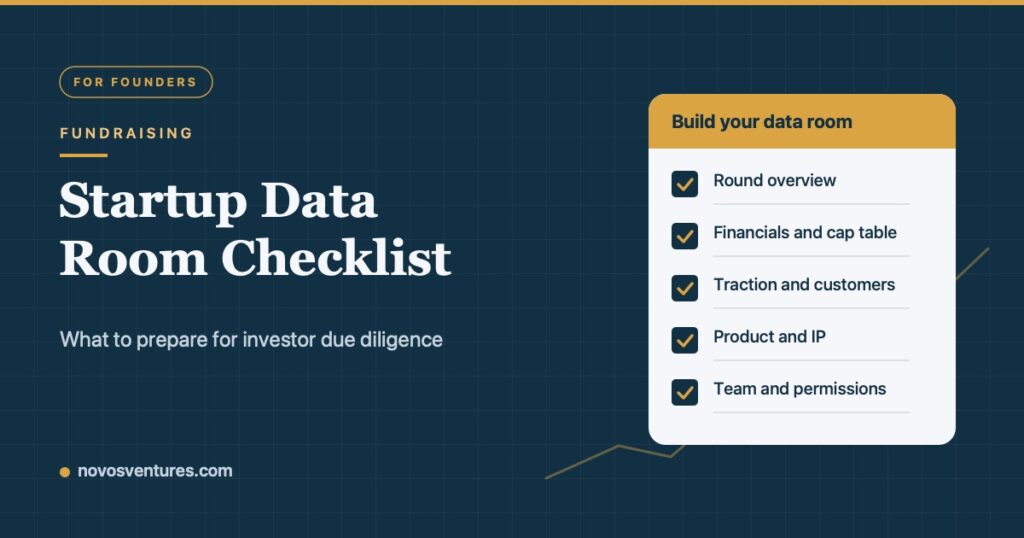
A startup data room makes it easier for an investor to trace the claims in your pitch deck to the evidence behind them. Start with a document index and six folders. Add items as diligence progresses, and give each investor access to the material they need for that stage.
What to include in a startup data room
01 · Round overview. Add your current pitch deck, a short company summary, the amount you’re raising and the milestones that the round would fund. Date each file so a reader can see which version is current.
02 · Financials. Include your financial model, recent actuals where available, a cash runway view and a short note on the assumptions that matter most. Label forecast periods and actuals clearly. Cross-check the funding ask and use of funds against your deck. See the Novos Ventures cash runway guide for help building that view.
03 · Capitalisation and company records. Prepare a dated cap table and a summary of outstanding options or financing instruments, where applicable. Keep company formation documents, signed financing agreements and other sensitive records in a restricted folder ready for a specific request.
04 · Traction and customers. Explain the reporting period, metric definitions and data source. For instance, if the deck says “five paid pilots”, show the date range and explain what you count as a paid pilot. Use aggregated customer evidence where possible and check confidentiality obligations before sharing named contracts.
05 · Product, technology and IP. Include a demo, product roadmap and a high-level description of the technology. Keep sensitive technical material and signed IP documents gated for later diligence.
06 · Team and operations. Add a team overview, role ownership and the hires the round would support. Summarise material operational dependencies. Keep personal records and detailed employment documents restricted.
Set permissions around the fundraising stage
For first meetings, start with the deck and a shareable overview. For an investor actively reviewing the opportunity, add the appropriate financial and traction summaries. Open restricted documents individually when requested and check the recipient’s permissions before sending the link. Use named access, review who has access periodically and revoke it when the review ends. Ask your advisers which documents should be shared for your round.
Make the index answer four questions
For each item, record the document name, owner, last updated date and access level. Add a status column for items that still need work. A useful entry might read “Cash forecast | Finance lead | 20 November | Restricted | Ready”. Keep working versions outside the investor view and update the index when you replace a file.
Check the room before you share it
Open the link from a test account with the same access as a recipient. Click each document in the index. Check that the raise amount, reporting date and headline metrics match the deck. If an item is unavailable, record who will provide it and when. For broader preparation, use the Novos Ventures investor readiness checklist.
Further reading on what to prepare at seed stage and how to organise diligence materials. Y Combinator seed fundraising guide · Visible startup data room guide.